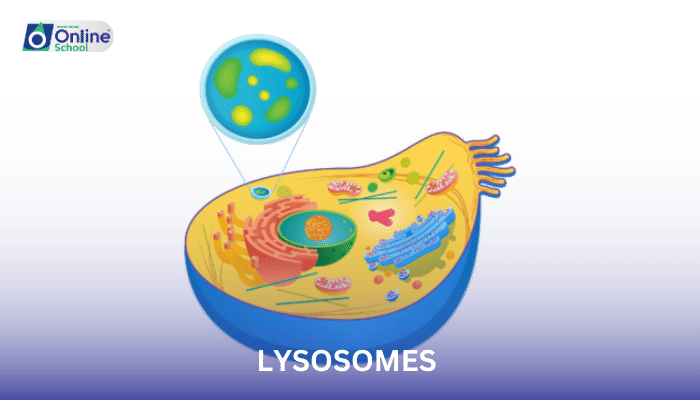
Learning Outcomes
i. Describe the formation and structure of lysosomes.
ii. Understand the various functions of lysosomes in cellular processes.
iii. Interpret the relationship between lysosomal malfunction and storage diseases.
i. Formation of Lysosomes:
Origin: Lysosomes are formed from the Golgi apparatus, where enzymes are tagged for lysosomal inclusion and packaged into vesicles.
Enzyme Content: They contain hydrolytic enzymes that are synthesized in the rough endoplasmic reticulum (RER) and then transported to the Golgi apparatus for further processing.
ii. Structure of Lysosomes:
Membrane-bound Organelles: Lysosomes are spherical organelles enclosed by a lipid bilayer membrane, which protects the cell from the potentially harmful enzymes contained within.
Enzymes: These organelles house a variety of enzymes capable of breaking down all types of biological polymers—proteins, nucleic acids, carbohydrates, and lipids.
iii. Functions of Lysosomes:
Intracellular Digestion: Lysosomes digest and recycle cellular waste, damaged organelles, and macromolecules, a process essential for cell maintenance.
Autophagy: Through autophagy, lysosomes break down and recycle cellular components, playing a key role in cellular renovation and survival under nutrient starvation.
Immune Response: They contribute to the immune response by digesting pathogens engulfed by the cell.
Apoptosis: Lysosomes can release enzymes that initiate apoptosis, or programmed cell death.
iv. Lysosomal Storage Diseases:
Causes: These diseases are caused by the malfunction of lysosomes, usually due to a deficiency in one of the enzymes. This leads to the accumulation of undigested material in cells.
Examples: Diseases include Tay-Sachs disease, Gaucher's disease, and Niemann-Pick disease.
Impact: Accumulation of waste products in cells interferes with normal cell function, leading to a variety of symptoms depending on the type of material that accumulates and where in the body it accumulates.
Lysosomes are vital for the maintenance and proper functioning of cells, playing a central role in intracellular digestion, waste recycling, immune defense, and apoptosis. Understanding the formation, structure, and functions of lysosomes is crucial in cell biology and medical research, particularly in the context of lysosomal storage diseases, where their malfunction has significant physiological repercussions.
